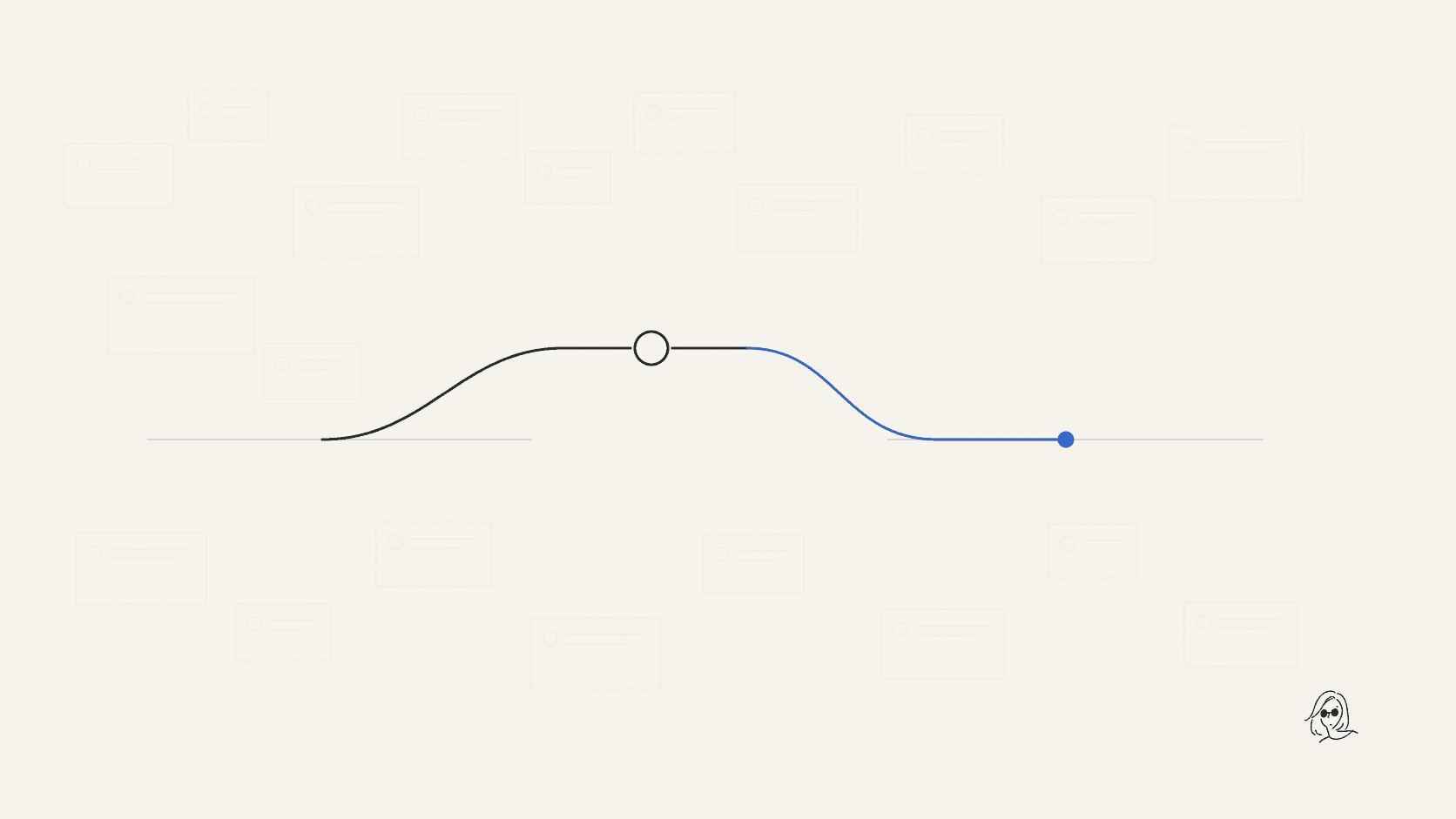
I have gradually noticed a clear preference in the way I work.
When a business has no answer yet, I become deeply engaged. I want to find the first users, sketch the product journey, design the conversion path, write the page and connect the scattered pieces.
But once the model works and the job becomes selling more of the same thing, repeating the process and making it steadily more efficient, my interest drops quickly.
I used to feel embarrassed to admit this. It can sound like a lack of patience, or an appetite for novelty.
Later I realized that exploration and scaling are simply two different kinds of work.
Zero to one reduces uncertainty; one to ten manages repetition
At the beginning of a new business, the questions are open.
What do users really want? Will they give it time or money? Where should the product begin? Which part of the journey needs to work first? Every interview and every change in the data may overturn the original assumption.
This stage demands fast learning and a tolerance for incompleteness. My attention naturally sharpens because each step makes the map a little clearer.
Once the path works, the center of gravity changes. The team has to improve delivery, stabilize sales, reduce variance, train more people and spend a long time improving a few percentage points. That is not mindless repetition. It is a demanding operating craft.
It simply draws on a different kind of energy from the one I use best.
I once designed a RMB 19.9 entry-level training camp from zero to one, connecting an assessment, user framing, course content and the products that followed. Once the initial journey worked, ongoing sales and service were taken over by people who were better suited to them. That was when I first felt the distinction clearly: opening a road and keeping traffic running on it every day are not the same job.
“I find it boring” does not mean the later work matters less
Sales, service and scaled operations are often harder than the first product version.
Without the repetition, follow-up and refinement that come later, even a strong zero-to-one effort remains a temporary experiment. A product’s long-term value and revenue often depend on people who are willing to protect the details and keep reviewing the same system.
I do not believe opening a path is more important than maintaining one.
I am simply becoming clearer about where my judgment creates the most value. When information is messy, responsibilities are undefined and a team does not know what to test first, I can quickly turn the ambiguity into a path that can be tried. When that path becomes stable and needs long-term efficiency, someone else may do that work better than I can.
Acknowledging the difference makes me respect collaboration more. Not everyone has to stay from beginning to end, and doing more tasks alone does not prove greater ownership.
A responsible departure must leave something others can take over
Of course, “I am good at zero to one” can also become an excuse.
If someone repeatedly enters at the most chaotic moment, leaves behind a half-finished system only they understand and walks away once the novelty fades, that is not exploration. It is simply creating new disorder.
A path that truly works should leave several things behind: a validated user problem, a clear product and conversion journey, observable measures, the reasoning behind key decisions and a process the next owner can take over.
Sometimes the person who opened the path also needs to walk it for a while, until the logic no longer exists only in their head.
I no longer require myself to enjoy every stage, but I do require myself to hand work over responsibly. A stopped hypothesis needs an honest explanation. A proven path needs a clear account of why it worked. The parts that require long-term cultivation should go to people who genuinely want to deepen them.
Wanting to leave after finding the first path does not always mean a lack of persistence.
Sometimes it simply means that a person’s best place is where the map has not yet been drawn. What matters is that, before they go, the path is real and the people who follow know how to continue.