In February 2025, I had my child. When I returned to work in August, I first worked with two specialists in family education and managed their WeChat Channels accounts.
The result was not impressive. Video is not my strongest medium, and the accounts did not create much momentum. But I spent a great deal of time interviewing users, meeting the specialists and reading real cases. I also began to understand everyday family conflict from the perspectives of psychology and brain science.
When I later joined an AI product team, I realized that this experience—although it had not produced a neat growth result—had quietly changed the way I saw users.
A piece of advice eventually lands in one real evening
Family-education content can easily produce correct advice: be patient, understand the child, establish boundaries, manage your emotions.
None of it is wrong. But the place where the advice actually lands may be a living room with a mother who has just finished work, a child who still refuses to do homework and an evening that is becoming harder to calm.
When someone has not slept, is anxious about work or has already repeated themselves many times, “be patient” is not a light action. If advice cannot see their energy, emotion and relationships at that moment, help can become another demand.
Becoming a mother did not suddenly teach me about every family. It did the opposite: it made me more aware that one household cannot represent another, and that something useful at one stage may not transfer unchanged to the next.
But it made me instinctively ask for details that are easy to omit. What time of day did this happen? What had the user just experienced? Who else was there? Does she need an explanation, reassurance or one small action she can take immediately?
A user persona should not compress a person into a few labels
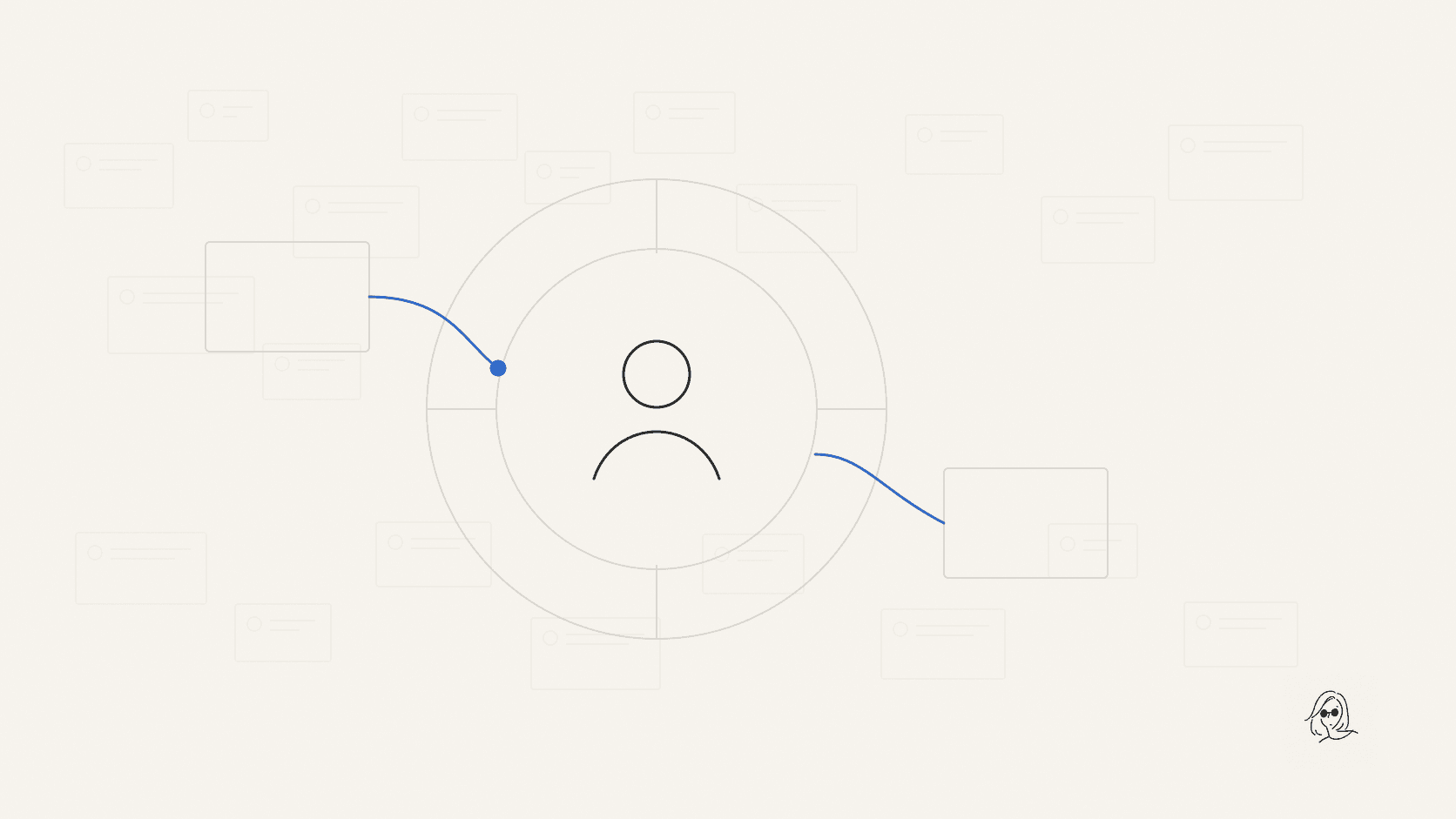
In product discussions, we often write down age, city, job and family structure, then give that segment a name. Personas are useful because they help a team form a shared picture quickly. But the neater the table becomes, the easier it is to forget that real people do not live according to a table.
The same mother may need parenting advice in the morning, worry about her career at noon and only want someone to listen at night. When she says, “I do not know what to do,” she may not lack knowledge. She may know many correct ideas and still have no energy for the next step.
This matters especially in conversational AI.
Models can give complete answers. Complete does not always mean appropriate. A system can offer ten suggestions at once without knowing that the user can hold only one. A good experience is not only about being correct. It must also judge what to ask, how far to go and how to place advice inside the life happening now.
That is why I now care about stories in user research, not only summaries. One specific failure, a moment of hesitation or a click that never happened often gets closer to the need than the phrase “I want something more intelligent.”
Mother is not my professional label; it is a new kind of attention
I once hesitated over whether to emphasize “mother” on my personal site.
I worried it would make my story look scattered, or that people would see the identity before the capability. Later I decided it did not need to be presented as a credential or carry the burden of proving expertise.
It simply explains why I now notice things I might once have passed over: the exhaustion of a caregiver, the difficulty of applying advice, the emotions moving through a household and the restraint technology needs when it enters real life.
Motherhood did not give me a standard answer about users.
It only made it harder to write “user” as an abstract noun. Whenever we say we are serving a group of people, I remember that behind every label is someone living through one specific day. That day is where the product will eventually have to enter.