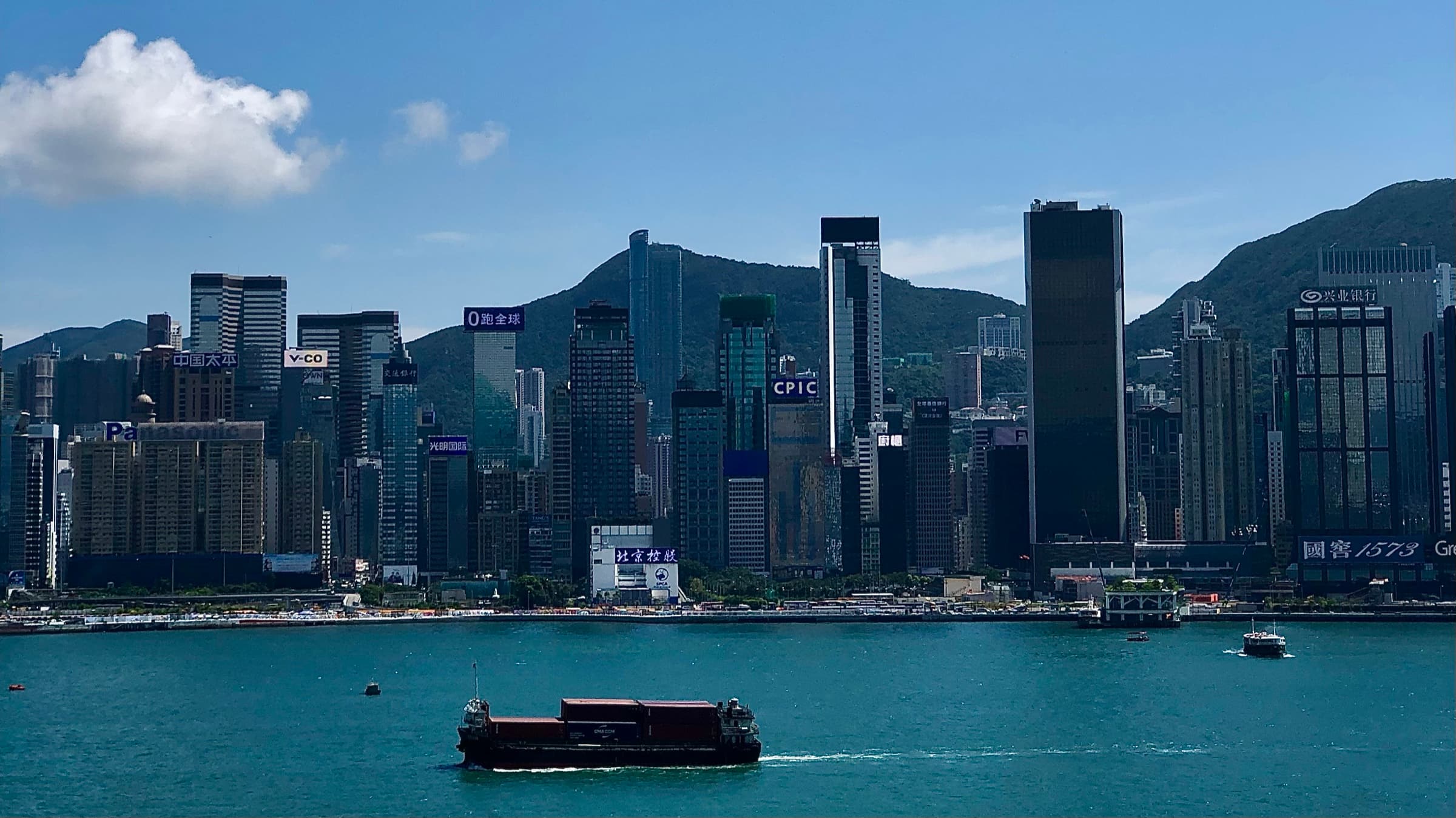
In 2021, I left my job at Bilibili and moved to Hong Kong for graduate school.
It was my fourth year after college. My previous jobs had all involved content, from writing and audio to video, and I was already on a familiar path. Leaving meant setting aside a stable job and the experience I had built to become a student again. To many people around me, it seemed like a difficult choice to make.
The truth is, I did not leave because I was unafraid.
I prepared my application while working full-time. I got up at five each morning to study English. At lunch, I pretended I had plans with someone and slipped into a milk tea shop near the office to memorize vocabulary. With less than a month of preparation, I took the IELTS for the first time and scored a six.
It was not an impulsive decision without consequences. I had calculated what I could afford to lose, and still did not want to give up something I had wanted for years.
I left to study, then learned to see my life again
Before leaving, the returns I could put into a plan were simple: study a new subject, earn a master’s degree, and find out whether I could understand ideas that had once felt unfamiliar.
What changed me in Hong Kong, however, was everything outside that plan.
Because of the pandemic, I could not return to mainland China and could hardly travel elsewhere. Hong Kong is not large, and after a few months, familiar routes began to repeat. Life still had to continue. I started taking my phone and looking closely at what was nearby: a concert, a walk up Victoria Peak, a small bookshop, a market, an old neighborhood, or a breakfast I chose to notice rather than rush through.
Those experiences eventually became “100 Things to Do in Hong Kong” and my Xiaohongshu account, Sweet Particle.
I later realized that this may be one of the most consistent things about me: wherever I go, I can rebuild a life quite quickly. I look for a route I enjoy walking, a shop I want to return to, and a corner where I can feel quiet again.
Many people felt deeply down during that period, and I had difficult days too. But I did not want to hand my entire emotional life over to the environment. The restrictions would not disappear, but I could still decide where to go that day, what to notice, and how to spend my time.
Adaptability, to me, is not simply endurance. It is seeing the limits clearly and still finding the part where I can act, care, and enjoy something.
“100 Things to Do in Hong Kong” also changed the way I looked at everyday life. Before, a meal, a walk, or a building I passed was just another moment that disappeared inside the day. Once I began documenting them, I noticed where the light fell, why a shop made people want to stop, and how a crowded city could hide quiet corners.
Creating did not give me a completely different life. It taught me to stop walking past the life I already had.
Many returns cannot be calculated before departure
Without paid promotion, Sweet Particle gained more than ten thousand followers in one month. I later received invitations from the Hong Kong Tourism Board, the West Kowloon Cultural District, the Hong Kong Palace Museum, hotels, and other brands. Xiaohongshu selected one of my posts for a printed calendar, and BBC Chinese invited me for an interview.
None of these things appeared in my study-abroad plan.
More unexpectedly, the account affected my career. It helped lead me to a role at Fanshu working with Xiaohongshu creators, and it contributed to my receiving a visa that allowed me to keep returning to Hong Kong. Experiences that had once seemed unrelated - content work, graduate school, photography, and studying platforms - recombined in a new environment and opened another path.
I used to think of a decision as an exchange: what do I give up, what do I get back, how much does it cost, and what result will it produce? But some decisions are valuable not only because they deliver a predefined goal. They create room for things that otherwise could never happen.
Courage does not mean ignoring the cost
I do not believe everyone should quit a job, study abroad, or leave a familiar city. If a choice threatens the basics of your life, or if it is only a way to avoid a problem in front of you, caution still matters.
For me, Hong Kong was one year. The cost had a boundary, and I could live with the worst likely outcome. I did not know whether it would lead to a better job, much less an audience of my own. I knew only one thing: if fear stopped me from going, I would probably keep thinking about it.
At the time, I thought I was completing a plan to earn a degree.
What the decision really did was give many previously impossible things a chance to happen.